
Introduction
────────────────────────
System data bigger than apps on iphone describes a state where the system data category occupies more storage than all installed apps combined because runtime processes and log allocation expand beneath the visible layer.
Apps may look normal in size.
No single app appears excessive.
Yet system data exceeds the total apps section.
This does not automatically mean the device is damaged.
On recent iOS versions, system data contains runtime caches, execution layers, temporary files, and diagnostic logs.
These elements are not traditional apps.
They function below the user interface.
When runtime services enlarge their working space, allocation shifts toward the system layer without new app installations.
The app footprint remains stable while the execution layer expands independently.
User control exists at the app management level.
Runtime allocation operates below that boundary.
This article defines where system data bigger than apps on iphone begins and where runtime and log allocation move beyond the visible application layer.
────────────────────────
Step-by-Step Guide
────────────────────────
────────────────────────
Step 1: Confirm Category Comparison
────────────────────────
Open Settings → General → iPhone Storage.
Compare the total Apps section with System Data.
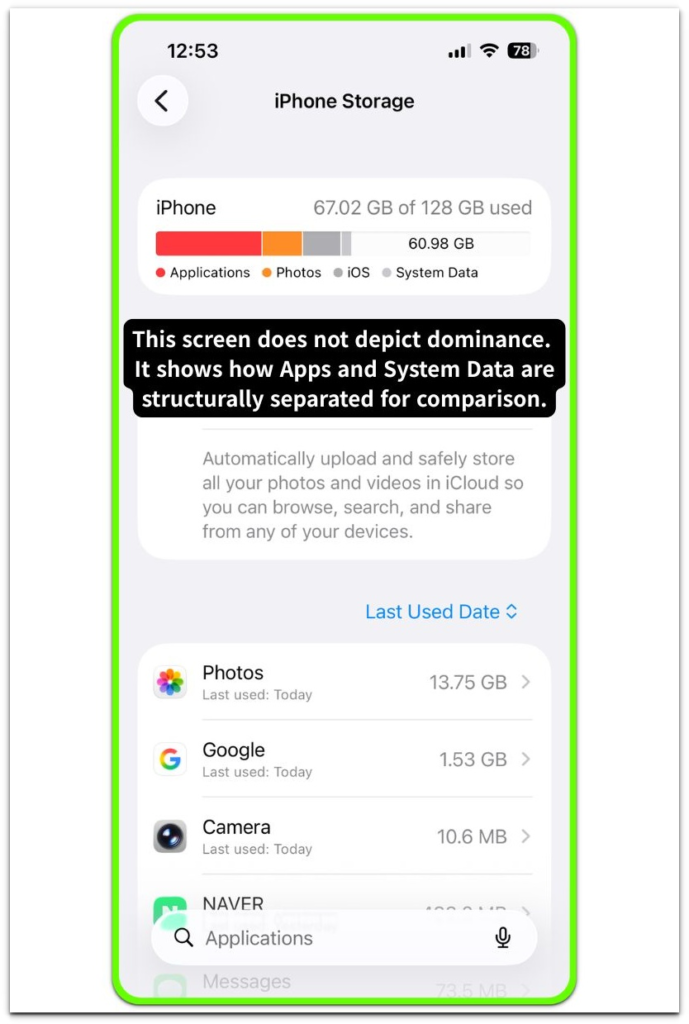
If system data exceeds the apps section, the structural condition is confirmed.
The ratio matters more than the absolute storage value.
A temporary spike does not define the pattern.
What matters is whether system data dominates while the apps section remains proportionally stable.
If apps stay unchanged but system data grows, allocation is shifting below the application layer.
That shift indicates runtime expansion rather than user-installed growth.
Focus on allocation dominance rather than remaining free space.
────────────────────────
Step 2: Exclude App-Level Expansion
────────────────────────
Scroll through installed apps sorted by size.
Verify that no single app or media package accounts for abnormal growth.
If no dominant app appears, the allocation shift likely resides in runtime layers instead of user-installed software.
The absence of an oversized app narrows the origin to system-managed storage.
If multiple apps show minor increases but none explain the total difference, the discrepancy is structural.
Runtime services can expand in parallel without appearing inside any individual app container.
Here, system data bigger than apps on iphone reflects runtime allocation dominance rather than application growth.
────────────────────────
Step 3: Check Recent System Events
────────────────────────
Review whether the device recently completed:
iOS update
Device restore
Large iCloud synchronization
Crash log generation
These events can increase runtime cache layers and log segments.
System rebuild activity often expands temporary working allocation before consolidation occurs.
If storage expansion followed one of these events, runtime and log allocation growth is structurally consistent with system behavior rather than random fluctuation.
If no such event occurred and the ratio remains elevated, the allocation pattern reflects internal service behavior rather than user-driven storage growth.
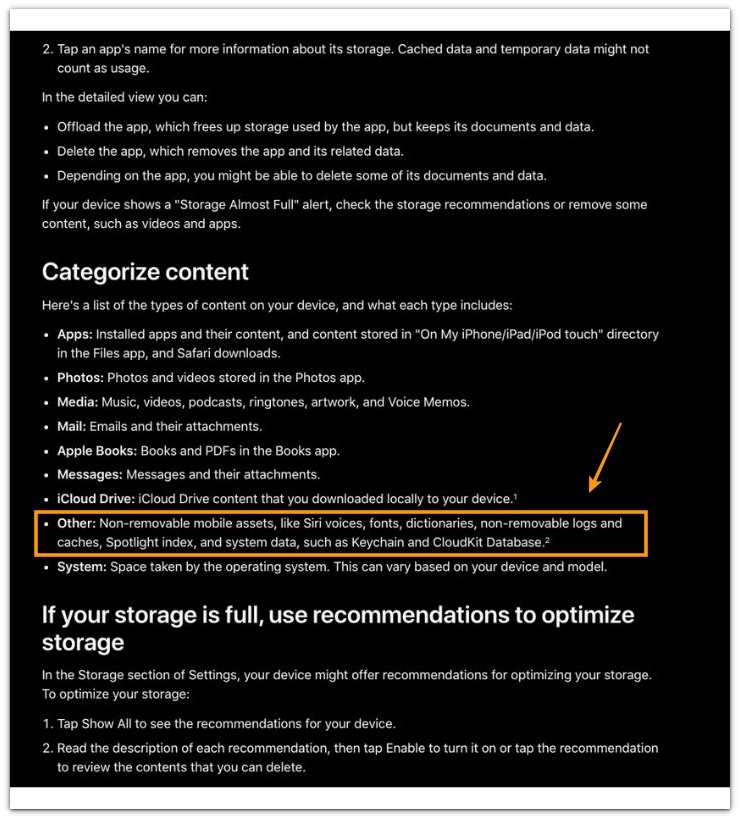
If the ratio remains elevated without any recent system event, refer to the official Apple documentation on iPhone storage behavior for further clarification.
────────────────────────
Troubleshooting: system data bigger than apps on iphone
────────────────────────
Troubleshooting 1: Runtime Consolidation Delay
────────────────────────
If system data remains larger than apps without recent updates or restores, the runtime layer may not have consolidated temporary execution space.
iOS periodically reorganizes background caches.
If that cycle has not completed, allocation can remain inflated.
This state reflects delayed consolidation rather than direct user action.
User control does not extend into runtime compression timing.
────────────────────────
Troubleshooting 2: Persistent Log Retention
────────────────────────
If storage does not rebalance after a restart, persistent log allocation may be retained for diagnostic retention policies.
Crash traces, analytics logs, and background service records can accumulate silently.
They are stored inside the system category.
That explains why system data bigger than apps on iphone persists even when visible applications are removed.
Their lifecycle is managed at the system layer.
────────────────────────
Troubleshooting 3: Background Indexing Reservation
────────────────────────
If system data continues expanding gradually, background indexing services may be reserving working space.
Search indexing, photo classification, and file metadata rebuilding operate beneath the application layer.
These services temporarily increase runtime footprint.
When the indexing queue stabilizes, the system reclaims temporary working space and allocation contracts accordingly.
Until stabilization occurs, size may remain elevated.
If the size remains elevated beyond normal indexing activity, deeper system-level review may be required.
────────────────────────
Additional Tips
────────────────────────
Avoid repeated app deletion in response to system data dominance.
Removing apps does not reduce runtime or log allocation.
When system data bigger than apps on iphone remains stable across multiple days, the allocation layer is operating independently of user deletion patterns.
Instead, observe whether the size change follows system events such as updates or major sync operations.
If system data remains consistently larger than apps across multiple weeks without structural events, the allocation pattern likely reflects persistent diagnostic retention or rebuild loops rather than temporary fluctuation.
────────────────────────
Final Notes
────────────────────────
When system data exceeds the apps category, the visible application layer is not the source of growth.
System data bigger than apps on iphone marks the point where runtime and log allocation clearly override application footprint.
The expansion originates from runtime and log allocation that operates below user-level control.
If no recent system events explain the increase and the ratio remains unchanged over time, the issue does not reside within app management.
It resides within the execution and retention framework managed by iOS.
User intervention ends at app removal and basic restart procedures.
Beyond that boundary, allocation behavior is governed internally.
────────────────────────
Checklist
────────────────────────
☐ Confirmed system data exceeds total apps size
☐ Verified no single app accounts for abnormal storage
☐ Checked for recent update or restore events
☐ Observed allocation pattern over multiple days
☐ Identified whether indexing or rebuild processes are active
When these checks are complete, the structural boundary becomes clear.
────────────────────────
Extra Section 1
────────────────────────
On one test device running a recent iOS version, system data became larger than apps immediately after a major update.
No new apps were installed.
No large media files were added.
The storage graph still shifted.
For the first two days, the number remained elevated.
Background indexing activity was visible in battery usage records.
Search and photo analysis services were active even during idle periods.
After several charge cycles, system data gradually reduced without manual cleanup.
No files were deleted.
No apps were removed.
This pattern showed that runtime and log allocation expanded temporarily during system rebuild activity.
The visible graph changed before the internal consolidation phase completed.
The key observation was time, not deletion.
────────────────────────
Extra Section 2
────────────────────────
On another device restored from backup, system data immediately exceeded the apps section.
All apps appeared normal in size.
Media libraries were stable.
Nothing explained the difference at the surface level.
Crash analytics and diagnostic logs had accumulated during the restore phase.
The device recorded multiple synchronization retries.
Each retry created additional log segments.
The storage graph did not rebalance for nearly a week.
During that period, system data bigger than apps on iphone remained visible despite no additional app activity.
Restarting did not change the ratio.
Eventually, after the sync process stabilized and no further retries occurred, system data compressed.
This experience made one boundary clear.
App deletion does not influence runtime and log allocation growth.
Observation over time provides more insight than aggressive cleanup attempts.