
Introduction
────────────────────
iPhone mediaanalysisd storage appears when the iPhone Storage screen shows unexpected storage usage connected to mediaanalysisd activity.
Users usually notice this while reviewing iPhone Storage.
The storage screen shows space assigned to system processes even though no new photos or videos were added recently.
Start by checking whether the Photos app recently completed background photo analysis or indexing tasks.
Background analysis can temporarily allocate storage while the system processes image recognition, object detection, and photo categorization data.
The mediaanalysisd service runs as a background media analysis engine used by iOS.
It examines photo libraries and generates searchable metadata for the Photos system.
When analysis activity expands during large photo libraries or after system updates, additional storage can appear inside the background processing layer maintained by mediaanalysisd.
This storage appears in the system layer rather than inside visible photo files.
────────────────────
Step-by-Step Guide
────────────────────
────────────────────
Step 1: Confirm Whether mediaanalysisd Storage Appears in iPhone Storage
────────────────────
Open Settings and select General.
Tap iPhone Storage to view the device storage overview.
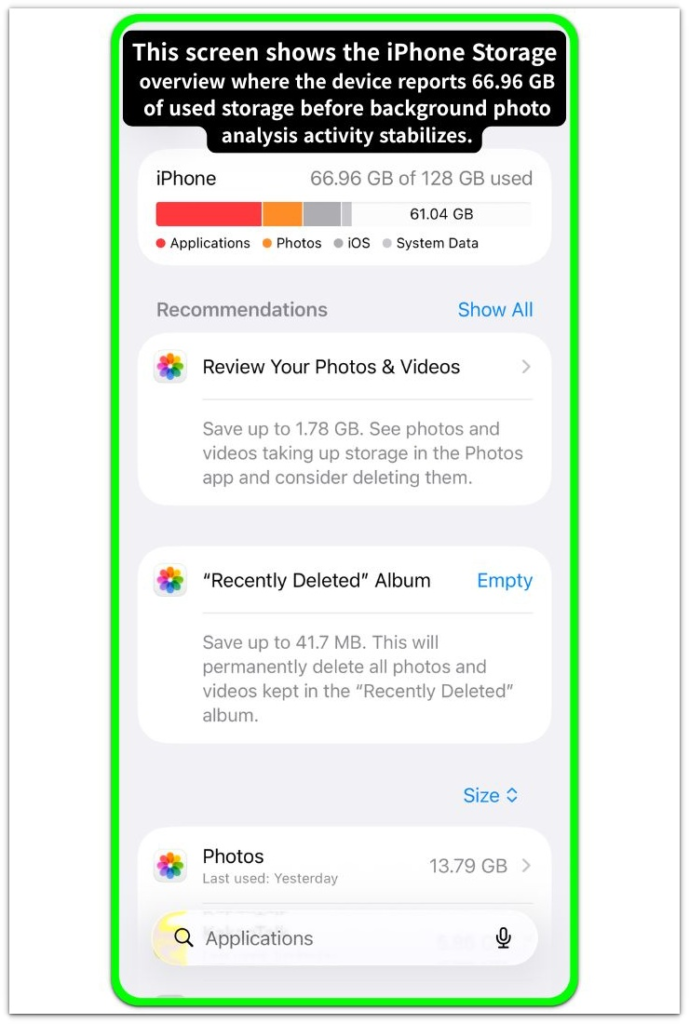
Scroll through the storage list and review the categories recorded by the system.
The storage screen may display space associated with system processes that operate in the background.
Check whether the reported storage corresponds to activity related to mediaanalysisd when iphone mediaanalysisd storage appears on the device.
────────────────────
Step 2: Check Whether the Photos Library Recently Triggered Media Analysis
────────────────────
Open the Photos app and review whether the photo library was recently expanded.
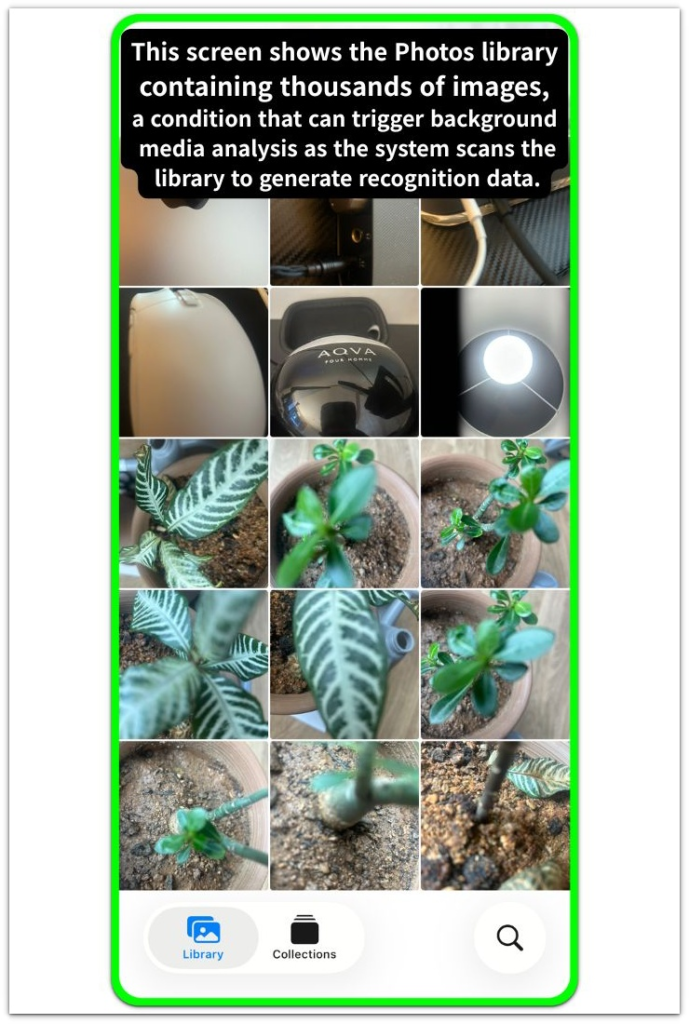
Large photo imports, restored backups, or system updates can cause the system to begin analyzing images again.
The system may run media recognition tasks to classify objects, faces, scenes, and search metadata inside the photo library.
These analysis operations are performed by the mediaanalysisd service operating in the background.
When the photo library contains a large number of images, the analysis process may generate temporary storage allocations inside the system media processing layer.
────────────────────
Step 3: Verify Whether the Storage Usage Stabilizes After Background Processing Completes
────────────────────
Return to Settings and reopen iPhone Storage after some time.
Compare the storage value associated with system processes with the value observed earlier.
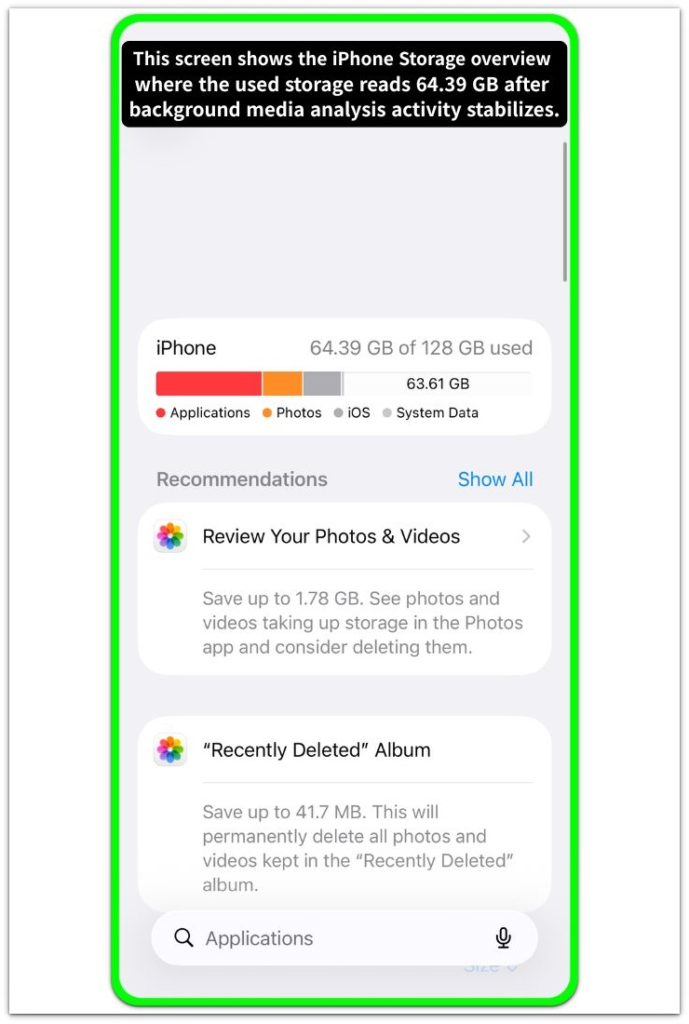
Background media analysis usually runs automatically until the system finishes scanning the photo library.
Once the analysis process completes, the temporary processing layer maintained by mediaanalysisd normally stabilizes and stops expanding.
This check helps determine whether iphone mediaanalysisd storage corresponds to ongoing background media processing rather than permanent user data stored on the device.
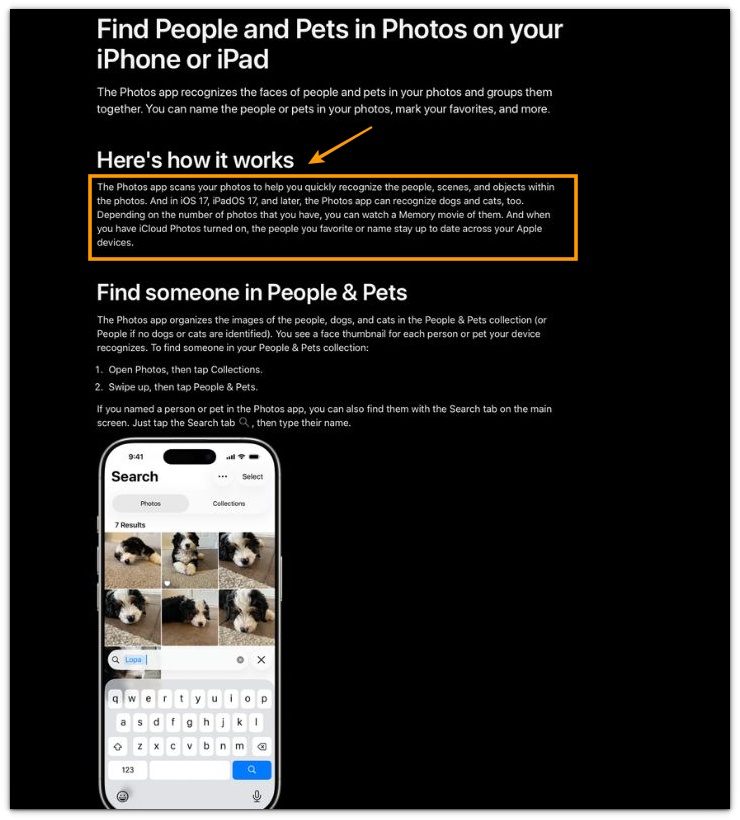
If you need further confirmation, refer to the official Apple explanation shown in the screenshot below.
────────────────────
Troubleshooting: iPhone mediaanalysisd storage
────────────────────
────────────────────
Troubleshooting 1: Photo Analysis Tasks Continue Until Library Indexing Completes
────────────────────
The mediaanalysisd service operates as a background analysis component used by iOS to examine images stored in the Photos library.
The system evaluates visual elements such as faces, objects, scenes, and searchable attributes that support search and categorization inside the Photos application.
Large photo libraries require extended indexing activity while the system builds and updates internal recognition databases.
The analysis engine may allocate temporary processing storage while recognition tasks run across the photo library.
This storage exists inside the system media processing layer managed by mediaanalysisd rather than inside visible photo files stored on the device.
────────────────────
Troubleshooting 2: Photo Library Expansion Triggers Additional Media Processing
────────────────────
Significant changes in the photo library can cause the system to start new background analysis tasks managed by mediaanalysisd when iphone mediaanalysisd storage appears in the storage screen.
This situation commonly follows device backup restoration, large photo imports, or system updates that refresh media indexing structures.
The system evaluates image data again so that search results, object recognition, and automatic photo categorization remain consistent across the library.
Large image collections increase the number of files examined by the analysis engine.
Temporary processing storage may grow inside the background media processing layer recorded by the system.
This recorded storage belongs to the analysis process rather than permanent media content saved by the user.
────────────────────
Troubleshooting 3: System Media Processing Storage Exists Outside the Visible File Layer
────────────────────
Storage connected to mediaanalysisd does not appear as normal files inside the Photos library or inside the file management layer visible to the user.
The analysis engine operates through internal system containers that store processing data and indexing fragments used by the media recognition framework.
These containers belong to the system service layer rather than the user file layer.
The storage interface may report additional usage even though users cannot locate matching files in their photo library.
This structure explains why iphone mediaanalysisd storage appears on the storage screen without any visible photo files increasing on the device.
In some cases, the issue may require further technical inspection beyond the basic settings available on the device.
────────────────────
Additional Tips
────────────────────
Background media analysis normally runs while the device remains connected to power and stays idle for a period of time.
Keeping the device connected to power allows the Photos system to complete analysis tasks without interruption.
The indexing engine gradually processes images until recognition data has been generated for the entire library.
Storage activity associated with background analysis usually stabilizes after the indexing process finishes.
────────────────────
Final Notes
────────────────────
The storage value connected to iphone mediaanalysisd storage reflects processing space used while iOS analyzes images and builds searchable metadata across the photo library.
The storage reading represents system media processing activity rather than uncontrolled file growth created by the user.
This behavior is a structural outcome of the background analysis engine that supports photo recognition features inside the Photos system.
The storage entry does not represent normal user files stored in the photo library.
This storage reading reflects the internal media analysis workflow rather than additional media files created on the device.
────────────────────
Checklist
────────────────────
☐ Check iPhone Storage to confirm whether mediaanalysisd activity appears in system storage
☐ Review whether large photo imports or backups recently expanded the photo library
☐ Keep the device connected to power so the Photos system can complete background analysis
☐ Recheck storage later to confirm whether processing activity stabilizes after indexing finishes
Once the indexing workflow finishes, the storage layer associated with mediaanalysisd usually stabilizes and stops expanding.
────────────────────
Extra Section 1
────────────────────
Many users notice iphone mediaanalysisd storage after checking iPhone Storage and seeing system storage grow even though no new photos were saved recently.
A common situation appears after importing several thousand photos from an older device or restoring an iCloud backup.
The Photos library suddenly becomes much larger than before.
The Photos system begins scanning the entire library to recognize faces, objects, locations, and searchable elements inside images.
This background recognition process runs through the mediaanalysisd service.
Users often assume the storage increase means hidden photos or duplicate files exist on the device.
The storage growth usually comes from the analysis engine examining the photo library rather than from new media files.
The indexing process becomes more noticeable when the device remains connected to power and stays idle for long periods.
During these periods the system continues scanning images and generating recognition data used by the Photos search system.
────────────────────
Extra Section 2
────────────────────
Another situation appears after a major iOS update.
Some users notice new system storage entries after updating the device and reviewing the storage screen.
iOS occasionally refreshes media recognition databases after system updates.
The Photos system reevaluates the image library so that search functions and automatic categorization remain accurate.
This reevaluation can temporarily increase the processing storage used by mediaanalysisd.
The storage entry appears in the system layer rather than inside the visible photo library.
Users sometimes attempt to delete photos or clear application data to reduce this storage value.
Those actions usually do not change the reading because the storage belongs to the analysis engine rather than to normal photo files.
The storage entry generally stabilizes once the system finishes evaluating the photo library and recognition data has been generated for the entire collection.