
Introduction
────────────────────────
iphone restore settings only path describes a restore state where iOS applies preference-level data while blocking full data restoration because the restore scope has already been restricted by the system.
The device completes setup without errors.
The Apple ID signs in normally.
Only settings or limited preferences are applied, while apps and user data remain missing.
This behavior is not caused by an interrupted restore.
The system determines the restore scope before any data transfer begins.
After that decision, iOS proceeds with a reduced restore process.
The process ends once preference data finishes applying.
This path reflects a boundary where restore scope is fixed at the system level.
User control does not extend beyond that point in iphone restore settings only cases.
Many users notice this only after setup finishes successfully but their data never appears.
────────────────────────
Step-by-Step Guide
────────────────────────
────────────────────────
Step 1: Confirm that only settings are applied
────────────────────────
The first judgment point is identifying what actually restored.
In most cases, system settings appear intact.
For example, Wi-Fi, display preferences, and basic configurations apply.
Meanwhile, apps, photos, messages, and app data do not return.
This pattern shows that iOS never attempted a full restore.
The system applied a limited scope from the beginning.
When setup finishes with preferences present but no user data,
the restore path was already narrowed before setup completed.
────────────────────────
Step 2: Understand where restore scope is decided
────────────────────────
In iphone restore settings only path cases, the restore scope is not chosen by the user.
Before data transfer begins, iOS evaluates restore eligibility.
During this evaluation, account state, backup conditions, and device history are reviewed.
If full restore requirements are not met,
the system does not retry partial data recovery.
Rather, iOS applies a settings-only scope and completes setup.
Once this scope is set, the system does not expand it later.
────────────────────────
Step 3: Why retrying restore does not change the scope
────────────────────────
Many users erase the device and attempt restore again.
This action repeats the same scope decision.
The system does not rebuild restore eligibility on each attempt.
For clarity, signing out of iCloud only confirms account access.
It does not reopen full restore permission.
Likewise, network changes have no effect.
Restore scope is decided before connectivity becomes relevant.
When setup finishes with preferences only in iphone restore settings only path cases,
the restore path has already ended.
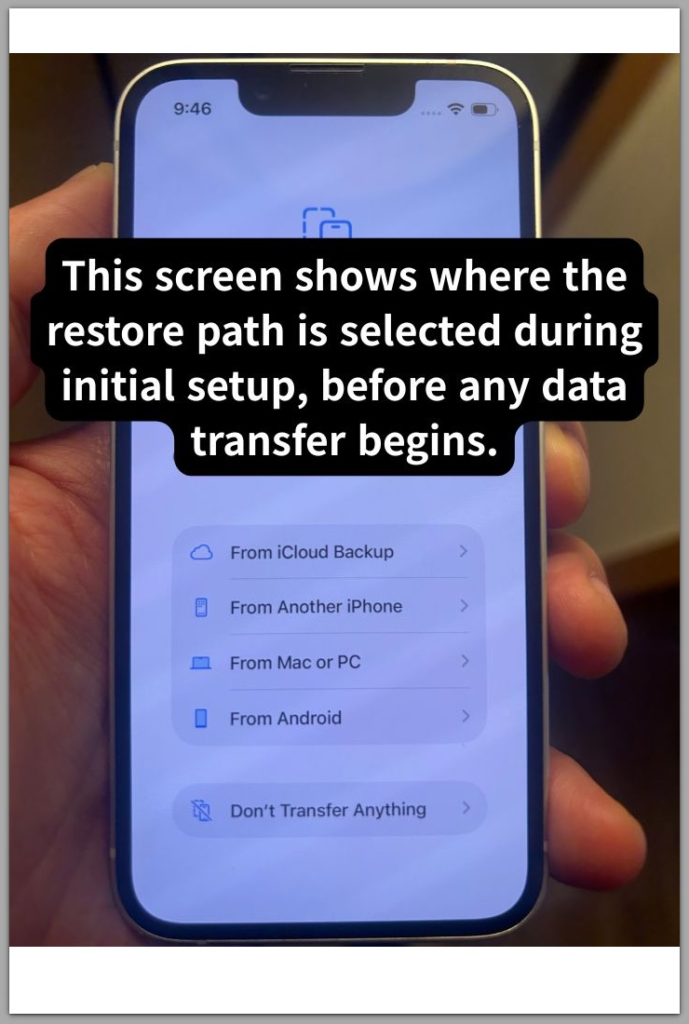
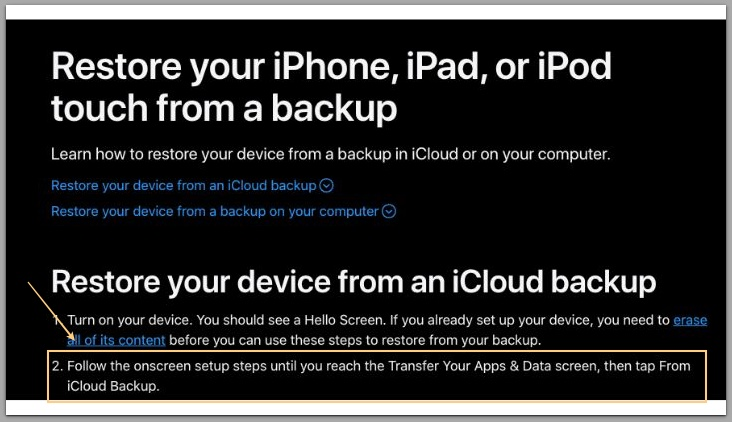
Apple’s official documentation explains that restore behavior and eligibility are evaluated before data transfer begins, and repeating setup does not expand the restore scope once it has been determined.
────────────────────────
Troubleshooting
────────────────────────
Troubleshooting no longer functions as a recovery method.
Its role is to confirm that the system has already limited restore scope in iphone restore settings only path situations.
A settings-only outcome does not indicate failure.
It reflects a completed restore path with reduced scope.
The checks below verify that the system decision remains consistent,
not that restore access can reopen.
────────────────────────
Confirm that the restore result is consistent
────────────────────────
First, erase the device and complete setup again using the same Apple ID.
If setup consistently finishes with preferences applied
and no apps or user data restored, the scope remains fixed.
In this context, consistency matters more than timing.
When the same result repeats after clean setups,
the restore path no longer changes.
This behavior confirms a system-level boundary.
────────────────────────
Verify that account access is not the limiting factor
────────────────────────
Next, sign in to the Apple ID during setup and confirm that iCloud services activate normally.
Settings sync, device registration, and preference updates confirm valid account access.
The absence of data restoration does not indicate a login failure.
When authentication succeeds but restore scope stays limited,
the restriction exists beyond credentials.
────────────────────────
Observe that network conditions do not alter the outcome
────────────────────────
If needed, repeat setup using different Wi-Fi networks.
A stable connection allows restore attempts to proceed,
but it does not influence scope decisions.
When settings-only restoration occurs regardless of network quality,
connectivity is not the deciding factor.
Restore scope is established before data transfer depends on bandwidth.
────────────────────────
Recognize when troubleshooting reaches its endpoint
────────────────────────
Troubleshooting reaches an endpoint.
That point appears when every reasonable variation
produces the same settings-only result.
Additional retries add no new information.
They only repeat a closed restore path.
Recognizing this endpoint prevents unnecessary resets
and reduces user frustration.
When restore behavior remains unchanged after standard checks, this confirms that troubleshooting has reached its limit.
────────────────────────
Additional Tips
────────────────────────
A settings-only restore often feels incomplete rather than finished.
Because preferences apply successfully,
users naturally expect data restoration to follow in iphone restore settings only path scenarios.
However, iOS separates restore layers intentionally.
Settings belong to a low-risk layer that applies broadly.
User data requires stricter conditions.
When those conditions are not met,
iOS completes setup using the safest available scope.
As a design choice, the system favors stability over feedback clarity.
Understanding this separation helps reset expectations
and avoids misinterpreting partial restoration as failure.
────────────────────────
Final Notes: iphone restore settings only path
────────────────────────
When an iPhone completes setup with preferences only,
iOS has already restricted the restore scope.
This result does not shift through repetition,
account reconfiguration, or network adjustments.
Instead, the system applies the widest restore path it currently allows.
After setup completes, restore access remains fixed.
User-level actions cannot extend it beyond that boundary.
The restore process has already reached its endpoint.
────────────────────────
Checklist
────────────────────────
☐ Device completes setup without errors
☐ System preferences appear intact
☐ Apps and user data do not restore
☐ Repeating setup yields the same result
☐ Apple ID signs in successfully
When the same outcome repeats after clean setup, restore behavior is no longer controlled at the user level.
────────────────────────
Extra Section 1
────────────────────────
In iphone restore settings only path cases,
confusion rarely comes from complete failure.
Instead, it comes from partial success.
Settings apply correctly.
The device appears usable.
That visible progress creates an expectation that data restoration should follow.
However, iOS does not treat restore behavior as a single operation.
It separates restore layers based on risk and stability.
Settings belong to a low-risk layer.
They apply even when deeper restore conditions are not satisfied.
User data belongs to a higher-risk layer.
That layer requires stricter eligibility before activation.
When those conditions are not met,
iOS completes setup using the safest scope available.
The system prioritizes stability over explanation.
Users see outcomes without receiving clear reasons.
Understanding this design prevents unnecessary retries
and protects the device from repeated resets.
────────────────────────
Extra Section 2
────────────────────────
The most important boundary in settings-only restore cases
is scope control.
This boundary exists before any visible restore activity begins.
By the time setup screens appear,
the system has already determined how far restoration proceeds.
Everything that follows reflects that earlier decision.
Users often search for missing steps or skipped screens.
The evaluation has already completed.
When setup finishes with preferences only,
the restore path has ended.