
Introduction
────────────────────────
iphone backup too big to restore describes a situation where an iPhone backup exists and appears usable, but the system skips applying large portions of data because the backup exceeds an internal size threshold evaluated before restore execution.
Many users mistake this state for a restore failure.
In reality, the system never fully starts the restore process.
The system determines the restore outcome before any meaningful data transfer begins.
Once the evaluation completes, repeated restore attempts produce the same result.
At this point, user actions stop influencing the outcome.
The system shifts control from user intent to system-level policy.
────────────────────────
Step-by-Step Guide
────────────────────────
────────────────────────
Step 1: Backup existence does not guarantee restore eligibility
────────────────────────
Seeing a backup listed in iCloud or Finder creates the assumption that restore is guaranteed.
That assumption does not hold when iphone backup too big to restore occurs, because the backup exceeds the system’s size threshold before execution begins.
Before copying data, the restore engine actively evaluates whether it can safely apply the backup.
This evaluation happens silently and completes quickly.
If feasibility checks fail, the system skips the restore path entirely.
Because execution never begins, no partial restore occurs.
────────────────────────
Step 2: Free storage and restore allocation are different checks
────────────────────────
Many users verify available storage and conclude that space is sufficient.
However, restore logic does not rely on visible free storage alone.
The system evaluates whether it can pre-allocate storage across protected domains.
The system evaluates app containers, system partitions, and security-isolated areas separately.
If any required domain cannot reserve space safely, the system blocks the restore.
This explains why restore may be skipped even when storage appears available.
────────────────────────
Step 3: Large backups fail before data transfer begins
────────────────────────
When a backup is too large, failure does not occur midway.
The system determines the restore outcome earlier during pre-allocation checks, which is why iphone backup too big to restore never fails midway and is rejected upfront.
The system copies no files, indexes no data, and writes nothing partially.
From the user’s perspective, the system appears to ignore the restore request.
In reality, the system rejects the operation before execution.
This explains why logs often show no restore errors.
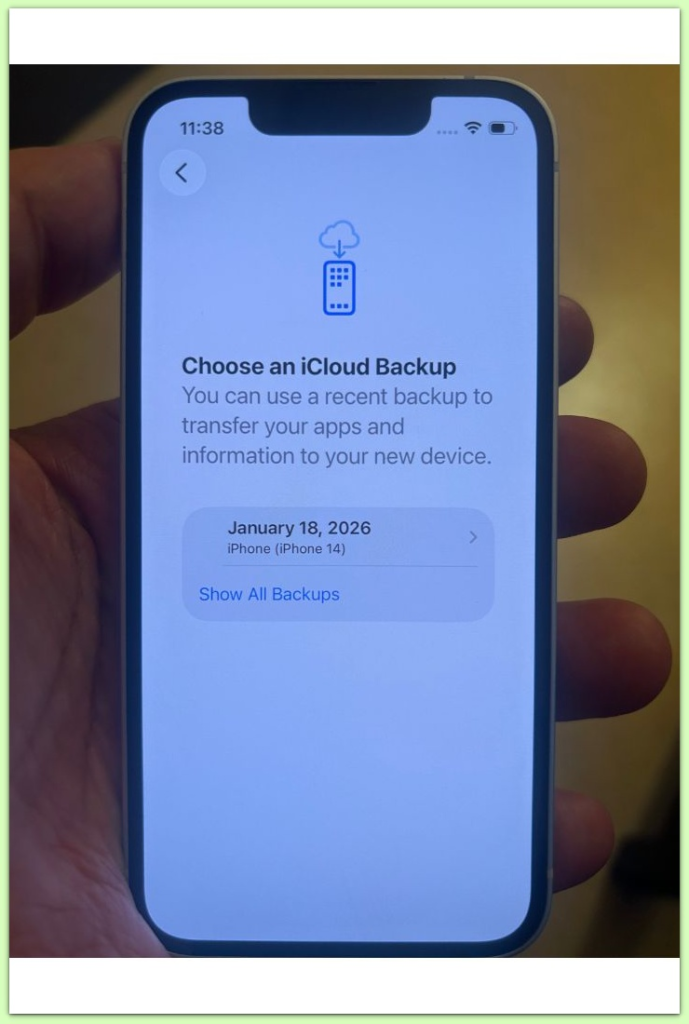
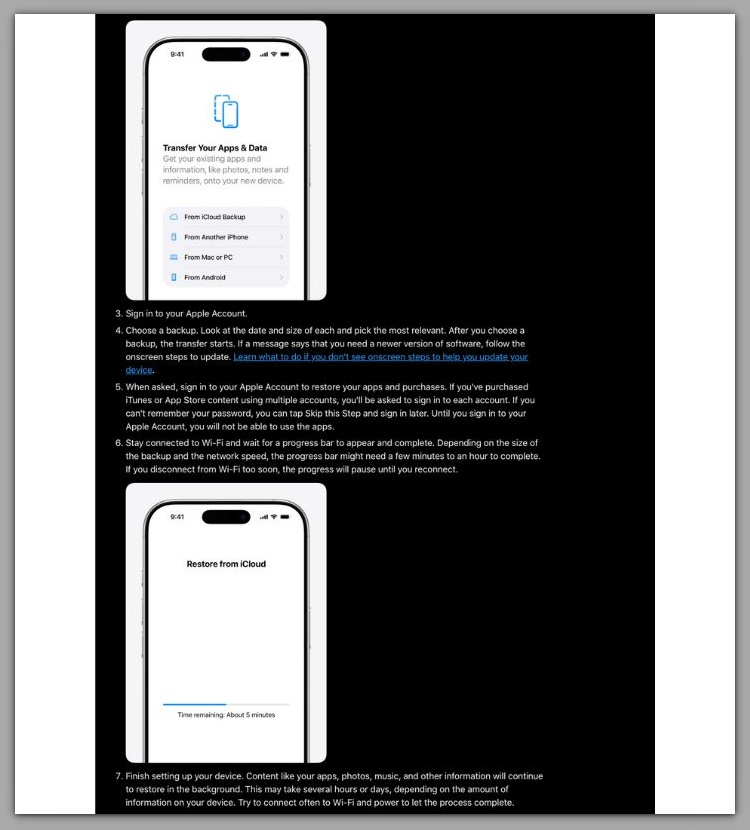
For reference only, you can review how Apple defines restore limitations on the official support page below.
────────────────────────
Troubleshooting : iphone backup too big to restore4
────────────────────────
────────────────────────
It looks like it worked, but nothing restores behavior
────────────────────────
This pattern creates the most confusion because nothing appears to fail.
The user taps the restore button.
The setup flow proceeds.
The system shows no explicit error message.
“This screen appears only during an active restore and is shown here for comparison.”
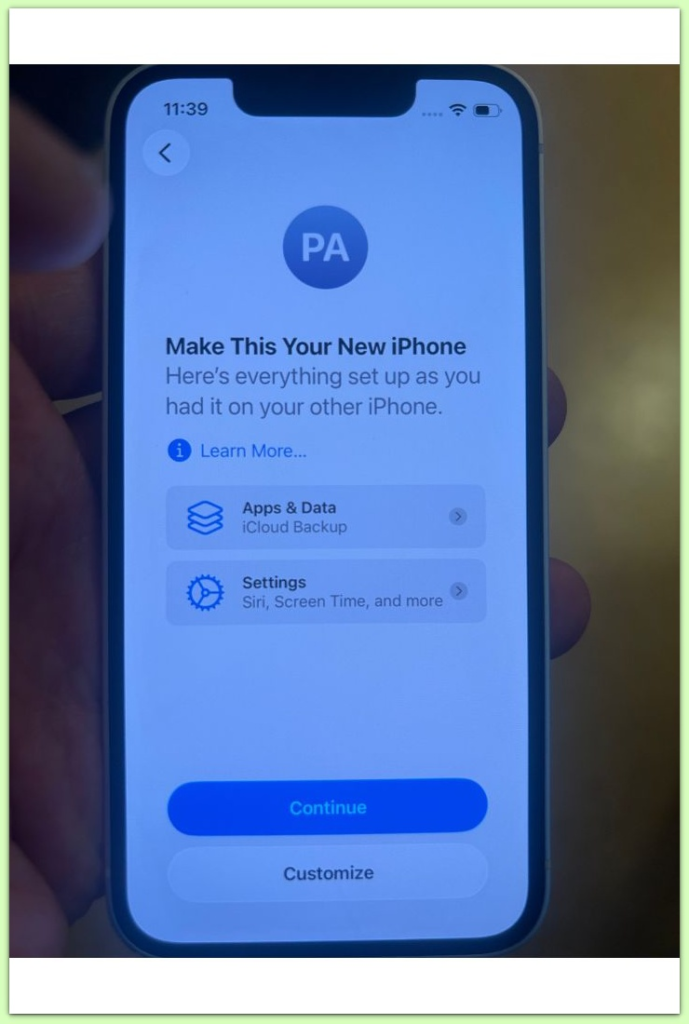
From the user’s perspective, the restore feels instant or ignored.
In reality, the restore execution never begins, which explains why iphone backup too big to restore produces the same silent result on every retry.
When the backup size exceeds the internal threshold, the system exits the restore path before it starts any data transfer.
Because execution never begins, nothing fails and nothing reports an error.
This explains why retrying produces the same silent outcome.
The system finalizes the decision before user interaction matters.
────────────────────────
Storage looks sufficient, yet restore is still skipped
────────────────────────
A common troubleshooting step involves checking available storage.
In many cases, the device shows enough free space.
This leads users to assume storage is not the issue.
However, restore logic does not evaluate free space in a simple way.
The system evaluates whether it can reserve multiple protected storage domains simultaneously.
Even when visible storage is high, allocation can fail at the container or security-domain level.
When that happens, the system skips restore by design.
This mismatch between visible storage and usable restore capacity causes most misdiagnoses.
────────────────────────
App deletion and cleanup rarely change the result
────────────────────────
Deleting apps feels like a logical fix.
It increases free space.
It reduces visible usage.
However, in size-threshold cases, app removal rarely affects the restore decision.
The system bases that decision on pre-allocation feasibility, not surface-level storage metrics.
If the threshold is exceeded before execution, cleanup actions do not influence the outcome.
The restore engine does not re-evaluate the decision based on minor storage changes.
This behavior reflects how the system handles restore conditions rather than a correctable user action.
────────────────────────
Additional Tips
────────────────────────
Large backups usually do not grow overnight.
They grow gradually through app data accumulation, cached media, and sync-managed content.
Because this growth remains silent, users often notice the problem only at restore time, especially when iphone backup too big to restore appears after years of normal use.
Device lifecycle also contributes to this outcome.
Backups created across multiple OS generations often include legacy data structures.
When users restore such backups onto devices with different storage rules, threshold conflicts become more likely.
This outcome reflects system compatibility behavior, not user error.
Understanding this pattern helps set realistic expectations before attempting restore again.
────────────────────────
Final Notes
────────────────────────
When iphone backup too big to restore occurs, the behavior is not random and not temporary.
The system blocks the restore process before execution due to an internal size threshold.
Once the threshold is exceeded, user-level actions no longer influence the result.
At this point, configuration troubleshooting ends.
System policy fully determines the outcome.
────────────────────────
Checklist
────────────────────────
☐ Backup exists and is visible
☐ Restore action produces no progress or error
☐ Free storage appears sufficient
☐ Repeated restore attempts behave identically
☐ No partial data is ever applied
In practice, this situation usually appears after years of accumulated app data, even on devices that show plenty of free storage.
────────────────────────
Extra Section 1
────────────────────────
The system does not use a fixed size threshold during restore.
Instead, the system calculates the threshold dynamically based on device storage layout, encryption domains, and system-reserved regions.
Because of this, two devices with the same storage capacity can behave differently.
Restore feasibility depends on whether the system can safely allocate space across all required domains at once.
If even one domain fails allocation, the system rejects the entire restore path.
This explains why one device may restore the backup successfully while another skips it.
The system makes this decision based on context and device-specific conditions.
Users cannot see this threshold, and no setting exists to override it.
The system enforces this boundary at the OS level.
────────────────────────
Extra Section 2
────────────────────────
When the system skips a restore due to size, the backup itself remains valid.
The backup stays intact.
The system simply deems it incompatible with restore execution on that device.
This distinction matters because it reframes iphone backup too big to restore as a system boundary rather than a recoverable restore error.
The issue does not involve corruption, interruption, or user mistake.
At this stage, the restore process has fully exited the user-controlled domain.
Further retries or configuration changes cannot reopen that path.
Recognizing this boundary prevents unnecessary troubleshooting and repeated restore attempts.
It clarifies exactly where control shifts from user action to system design.